Sustainable Shepherding
We shepherd in a traditional and sustainable way known as hefting*. This approach enables us to manage our flocks in a way that protects the vast range of special habitat where our sheep live and roam high in the Cambrian Mountains and Elan Valley.
We shepherd our hefted hill flocks in traditional ways on foot, pony, and quad, whilst weaving in modern environmental practices and encouraging sustainable farming.
This work is achieved with a community of farming neighbours and shepherding friends.
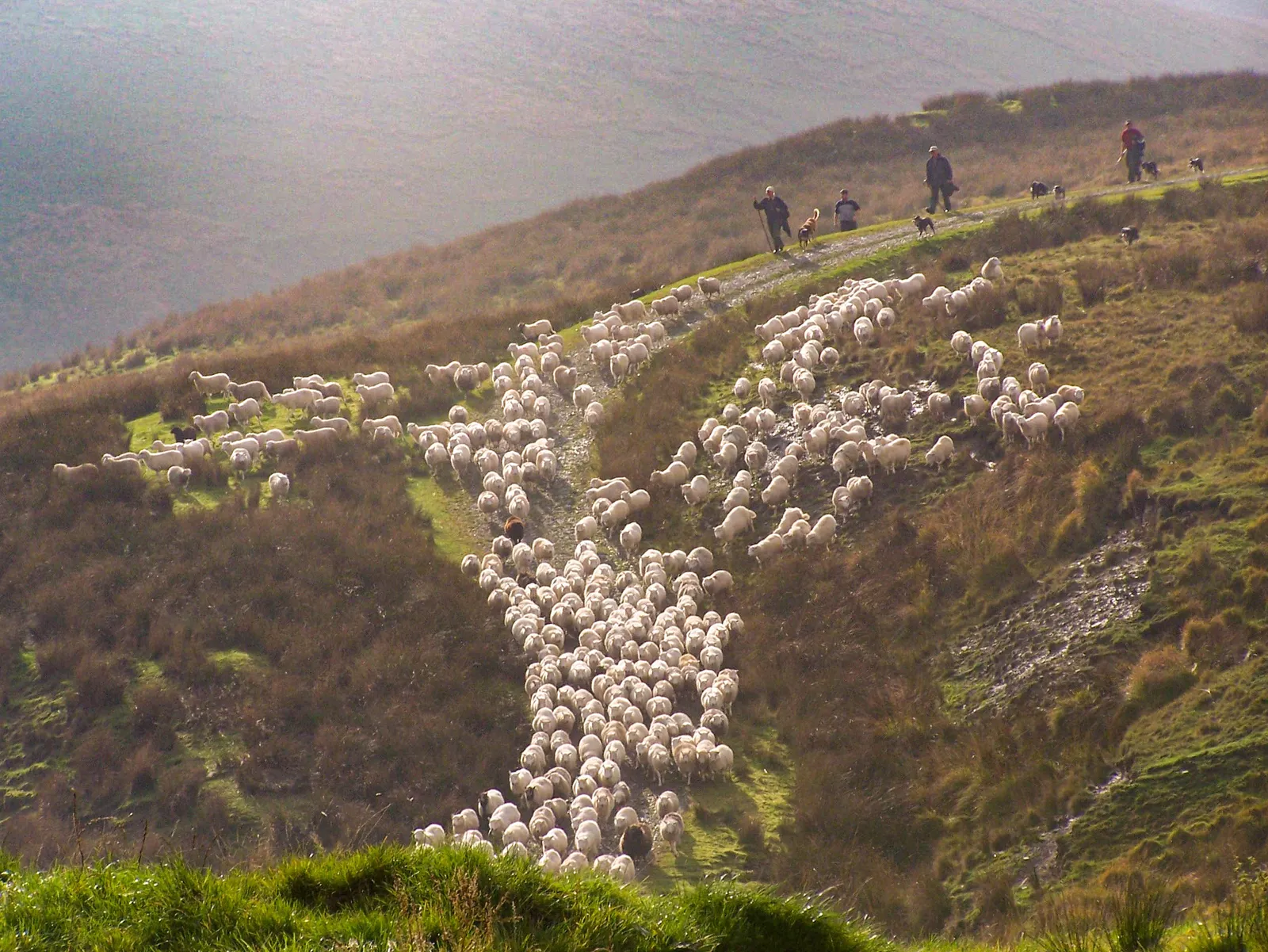
The farm is recognised as part of the most important hill land for nature conservation in Europe; it is a Site of Special Scientific Interest (SSSI) within the Elenydd designated Special Protection Area, Special Area of Conservation.
We believe our approach to shepherding offers huge benefits to the planet:
- it benefits nature conservation by protecting and enhancing biodiversity
- it benefits the environment through managed grazing which sustains important bog and plant land that captures and stores carbon, and which purifies the water running through the ground
- it preserves the heritage of the native sheep that survive and thrive in its rugged uplands
Our sheep
Our sheep are native Welsh Mountain Sheep of the Elan Valley – flocks of which have roamed these open range upland moorlands for centuries.
We have great respect for our sheep, appreciating their hardiness and intelligence. Their health and wellbeing is at the centre of our approach to shepherding.
We are Farm Assured.
*Hefting is a natural way to manage sheep grazing. “All wild and feral sheep have a strong female home range tendency and this natural instinct has been encouraged in discreet flocks to become the management practice known as hefting. It enables livestock to graze selected areas without the need for fencing, and is often re-enforced by shepherding. Flocks are accustomed to graze particular areas, and develop resistance to particular parasites, mineral deficiencies and plant toxins. The knowledge of boundaries, optimal grazing and shelter is passed from ewe to lamb over succeeding generations. A successful heft is often dependant on sufficient numbers of ewes in adjacent hefts to act as boundaries. Hefting is practised in most upland and remote areas, usually among the poorest and most difficult land in the country” (DEFRA, p.2)

